
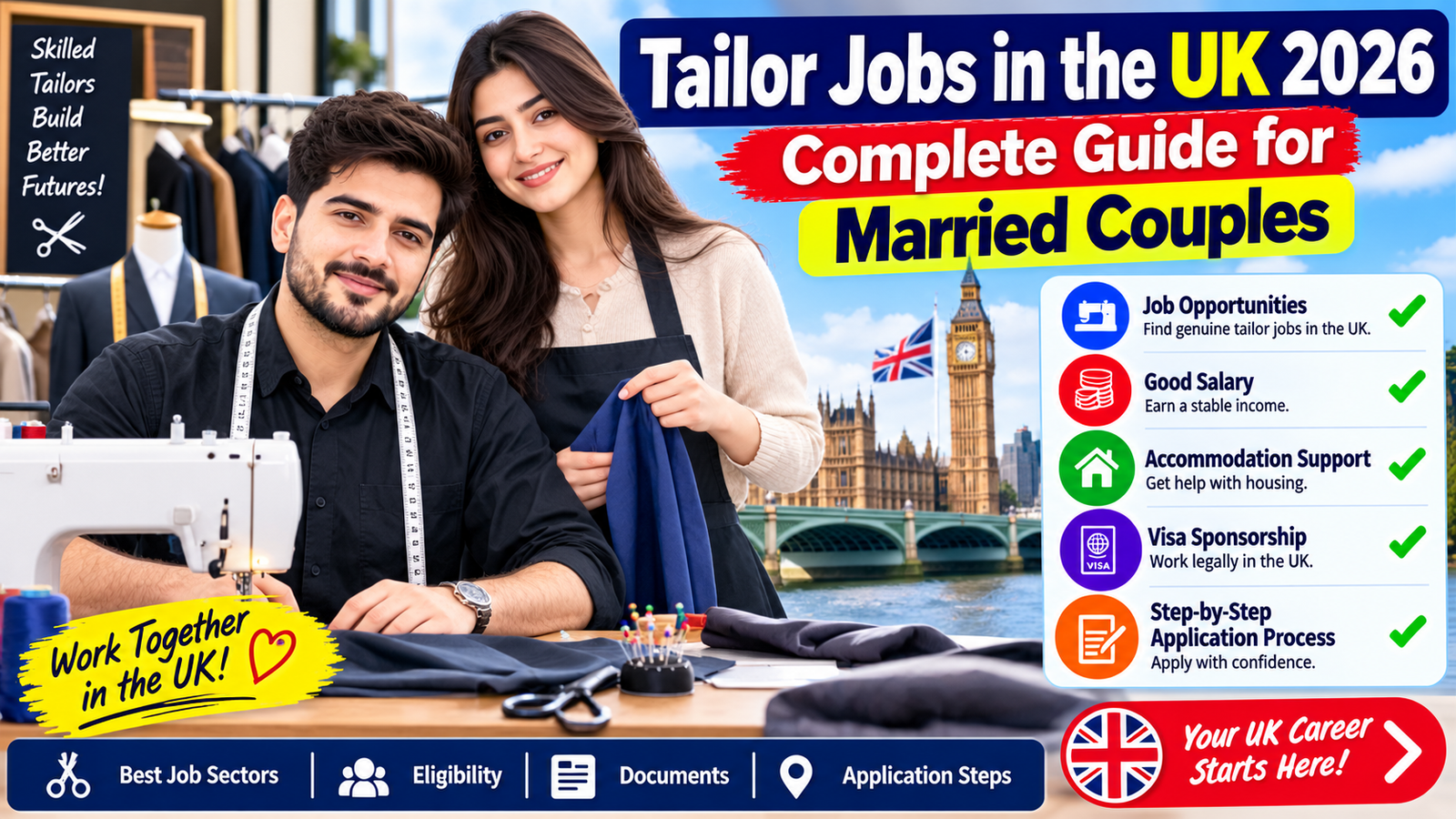
In the clothing industry, tailoring is a useful skill. Tailors make new clothes, repair damaged clothes, and alter clothes to fit customers. They could find work in tailoring shops, garment factories, fashion companies and alteration services.
If you are married and are looking to make a future in the United Kingdom, you might want to consider tailoring jobs. People who sew and have hands-on experience can search out the right vacancies and learn what employers want to see in applicants.
But getting a job is only half the battle in moving to another country. Foreign applicants should also be aware of the UK’s work visa rules. It is important to understand that a job offer does not automatically allow you to work or move a spouse to the UK.
This guide explains the skills you need to have to work as a tailor, how to write an application, what married couples should know about visas and how to avoid false job offers in 2026.
What is a tailor in the UK?
A tailor uses fabric and clothing to make garments fit well. Some tailors make clothes from the start, while others repair clothes or change the size and shape of clothes.
Your daily routine could include measuring, cutting fabric, sewing seams, replacing zips, shortening trousers and changing sleeve lengths. Tailors can also fix jackets, dresses, suits and other clothes.
It is contingent upon the business. A small tailor shop might primarily perform clothing repairs and alterations. In a fashion business, you may require workers who can produce garments based on a design. Some employers may want to see experience with formal suits, wedding clothing or traditional clothing.
Tailors need to know how to work with different materials and how to handle sewing tools safely. They also take patience, as small mistakes can impact the final fit of a garment.
Job seekers should check the full job description when seeking employment. A tailor, dressmaker and sewing machinist may do different things although all three jobs are in the clothing industry.
Skills and Qualifications for Tailor Jobs
Tailor jobs requirements vary by employer and the type of work. Some employers may place more emphasis on practical experience and others on candidates that have undertaken relevant training.
You don’t have to think every job needs the same qualification. Read the vacancy carefully to determine whether the employer requires previous experience, a training certificate or specific sewing skills.
Sewing and Clothes Repair Abilities
Most tailoring jobs require good sewing skills. Workers might be expected to mend seams, alter garment sizes, or perform neat clothing repairs.
Experience with sewing machines, scissors, measuring tapes and other tailoring tools can be useful as well. Tailors need to be able to take accurate measurements and choose the right methods for different fabrics.
If you have experience in making suits, repairing trousers, adjusting dresses or working with traditional clothing, describe such skills in your CV. Hands-on experience can give an employer an idea of what type of work you are capable of.
Education and Training
There is no one qualification that applies to all tailoring jobs. Some employers will consider applicants trained in tailoring through on-the-job experience. Some might want formal training or experience in making clothes.
If you trained as a tailor in a training center, college or local shop, state this in your application. What did you learn and what sort of clothes are you able to make or mend?
If you don’t have a formal certificate, highlight your actual skills and experience. Don’t claim qualifications that you haven’t earned.
Communication & Team Work
Tailors who work with customers directly may have to talk about measurements, fabric choices and clothing changes. They should listen and explain what can be done.
In a clothing workshop, workers might need to follow instructions from a supervisor and work with other team members. Basic English can be useful for understanding instructions, and communicating at work.
The level of language required will depend on the job. Applicants should consult the employer’s requirements before applying.
How to Apply for Tailor Jobs in the UK 2026
Begin by looking for tailoring jobs and reading the job details carefully. Look for the employer’s name, the job location, the skills needed, the working hours and the application instructions.
You can search for these types of jobs as “tailor jobs in the UK”, “dressmaker jobs”, “clothing alteration jobs”, “sewing machinist jobs” and “garment repair jobs”. Different employers use different job titles, so it may be useful to search using multiple terms to locate appropriate opportunities.
You may also want to consider clothing shops, alteration services, fashion workshops and garment businesses in the areas in which you want to work. Some employers advertize the vacancies themselves.
Before applying, check that the position is still open and that you meet the requirements. If you are not in the UK, verify that the employer accepts applicants from abroad.
Just because a job is advertized in the UK doesn’t mean an employer can sponsor a foreign worker. You will need to separately check eligibility for work visas.
How to Write a Good Tailor CV
Your CV needs to be clear, honest and easy to read. Please include your contact details, work experience, tailoring skills, training and relevant qualifications.
Describe the work you have done in previous jobs. Perhaps you’ve mended clothes, fitted clothes, changed suits, operated sewing machines, or worked with various types of fabric.
If you have a collection of photographs of your work you might be able to prepare a small portfolio. Select clear pictures of clothing you have made or repaired. Make sure pictures are of your own work and you have permission to share them.
You can also include a short introduction at the beginning of your CV.
For instance:
“Experienced tailor with hands-on experience in sewing, clothing repairs and garment alterations. Can measure, work with different fabrics & do jobs carefully. Looking for a suitable tailoring position to apply my skills and grow my experience.”
Customize this example with your own background. Don’t say you did something you never did.
Application for Tailor Positions
If a vacancy appeals to you, please read the whole advertisement before applying. Verify the skills, experience and documents requested by the employer.
If asked, prepare your CV and a short cover letter. Tell me about yourself and why are you interested in this position and how is your experience related to the job.
If you are applying from outside the UK, please be honest about where you are now and your immigration status. Ask the employer whether they sponsor overseas applicants and if there is a legal work visa pathway for the role.
If an employer calls, ask about the job duties, the workplace, the working hours and the recruitment process. Make sure you understand the terms before you accept an offer.
Just because you have a job offer doesn’t mean you should quit your job, buy plane tickets, or make major financial decisions. First, make sure the employer and job are legitimate and that you can work in the position.
UK Work Visa Rules for Tailors
A foreign national normally needs permission to work in the UK, unless their existing immigration status already allows them to take the job.
The Skilled Worker visa has particular rules about eligible occupations, approved sponsors and other requirements. Not every job qualifies for this visa.
The UK occupational classification lists tailors and dressmakers under occupation code 5413. However, simply because an occupation is listed, it does not automatically mean that a new applicant will qualify for a Skilled Worker visa. The present immigration rules should be looked at, as should any restrictions on jobs for people of medium skill.
This is especially true for applicants who hope to have an employer organize sponsorship. Before you accept a job offer, check whether the specific position is eligible based on the rules that apply to your application.
Some people already have permission to work in the UK under another immigration route. Their choices are limited by the terms of their permission.
A job offer does not guaranty that the visa will be approved. Applicants and employers must meet the criteria of the relevant route but the immigration authorities have the final say.
What Every Married Couple Should Know
Both partners need a legal route to live in the UK, so married couples will have to plan their applications carefully.
If one partner finds a tailoring job, the other does not automatically get permission to move to the UK. Can my spouse apply as a dependant? This depends on the main applicant’s visa route and the rules that apply to that route.
Some work visa routes allow eligible dependants to come with you, but other work visa routes have restrictions. Couples should check out these rules before taking a job or paying recruitment fees.
If one partner is able to sponsor the other it may be possible to apply for a separate family visa. These can include proof of a recognized marriage or relationship, financial evidence and English language requirements. The immigration status of the sponsor itself is also a factor.
Marriage does not automatically give you a UK visa. Couples have to meet the rules and provide the necessary evidence for the route they choose.
Before you apply, talk about your plans. Determine whether to apply one partner first or both may qualify using different routes. Check costs, papers and working conditions for each person.
How to Spot Fake Job Offers
Those looking for foreign employment may come across advertisement that promise job and visa guaranty. If you’re asked to pay a lot of money, be careful until you have clear information about the employer and the job.
Check that the business is real and the vacancy is genuine. If in doubt, call the employer directly using the contact details on its official website.
Just because an offer looks professional or has a company logo, don’t trust it. Be wary of any recruiter who rushes you into paying or promises that your visa will be approved for sure.
Do not submit fake certificates, fake experience letters or misleading information. Wrong information can cause serious issues with a job application or visa applications.
Before paying for the recruitment service, check whether it is legitimate and know what the fee covers. Always check official government guidance for the important immigration information.
UK Tailoring Career Readiness
Tailoring is a career that requires skill, patience and an eye for detail. Employers want people who can do jobs properly and to the standard customers expect.
You can increase your chances by practicing different sewing techniques, studying fabrics and keeping samples of your best work. If you can get experience with the sort of garments worn by the employers you want to approach.
It is also useful to improve your communication skills and learn to explain your work experience clearly. Anticipate questions about your sewing skills, previous employment and your ability to meet deadlines.
Read employment terms carefully before accepting a position. Make sure you know where you will be working, what your duties will be, how many hours you are the expected to work and whether there are any training requirements.
Key things to check before applying
| Things to look for | Why it matters |
| Personalizing skills | The employer may require experience in the sewing, repairs or clothing alterations. |
| Work experience | Some positions require previous experience working in a tailoring shop or workshop. |
| Portfolio and CV | These help demonstrate your skills and the quality of your work. |
| Right to work | You must be legally entitled to take the job. |
| Visa requirements | Not all tailoring jobs qualify for a work visa. |
| Spouse visa options | Your partner needs to see if they can apply through a suitable route. |
| Employer information | Business verification reduces the risk of fake job offers. |
Most Asked Questions
1. Are tailor jobs in the UK 2026 open to foreigners?
Yes, foreign applicants can find tailoring jobs. However, they must also be able to meet the needs of the employer and the have the legal right to work in the UK. Not all employers hire workers from overseas.
2. Do jobs in the UK offer visa sponsorship?
Not all tailoring jobs can be sponsored and some employers may employ overseas applicants. Don’t take the employer’s word for it — check the immigration rules that apply to the job.
3. Do married couples come to the UK together?
Depending on the immigration route. Some routes allow a spouse to be a dependant whilst others have restrictions. Both partners should check to see if they are eligible before planning.
4. What skills are helpful for tailor jobs?
Useful skills include measuring, sewing, fixing clothes, changing clothes and the using different materials. Some employers may also want experience with certain kinds of the clothing.
5. I learnt tailoring in Pakistan, can i apply?
Yes, you can use your experience when applying for appropriate vacancies. Do explain clearly your skills and give example of your work if you can. You must still meet the employer’s criteria and UK work rules.
6. Does a job offer ensure a UK visa?
No. Does not guaranty a visa. Job offer. The role, employer and the applicant must meet the requirements of the relevant immigration route.
7. If I get a visa, can my spouse work in the UK?
That depends on which visa route you are on and your spouse’s immigration permission. Your mate should check the conditions of the route before assuming they are OK to work.
Conclusion
People with skills in sewing, clothing repairs and garment alterations may be interested in tailoring jobs in the UK in 2026. A strong CV, relevant experience and the diligent job hunting will help you find roles that the match your skills.
Married couples planning to move should definitely check the immigration rules. A tailoring job does not necessarily mean getting a work visa or permission for a spouse to come with the worker.
Review the employer, understand the job requirements and confirm the visa rules that apply to your situation. By thinking things through you can make informed choices about work and building a future in the UK.